
Creative Self-Care for the Holidays: Music, Art & Visualization for Emotional Well-Being

The holidays can be magical—but they can also be overwhelming, triggering, and emotionally exhausting. Between family dynamics, financial pressures, sensory overload, grief for what's missing, and the relentless expectation to feel joyful, your emotional well-being might take a serious hit during this season.
While traditional self-care advice often focuses on bubble baths and saying no to events, what if you need something deeper? Something that actually processes emotions rather than just buffering against them? This is where creative self-care comes in. Tune in Therapy services and approach—using music, art, and visualization as powerful tools for navigating the holidays with greater authenticity and resilience.
Let's explore how these creative practices can support your emotional well-being when the holidays feel like too much.

Why Creative Self-Care Works During the Holidays
Creative self-care engages different parts of your brain than verbal processing or logical problem-solving. These practices allow you to:
Access emotions that are hard to put into words
Release stress stored in your body and nervous system
Process complex feelings without needing to explain or justify them
Create safety through self-expression
Find moments of presence amid holiday chaos
Honor your authentic experience rather than performing joy you don't feel
For neurodivergent individuals, those managing trauma, or anyone who finds traditional therapy or journaling insufficient, creative self-care offers alternative pathways to emotional well-being.
Music as Medicine: Sound for Emotional Regulation
Music has a unique ability to shift our emotional and physiological states. During the holidays, when you're navigating difficult emotions, music can be a powerful tool for self-care.
Active Listening for Emotional Release
Rather than using music as background noise, try active listening as self-care:
Choose music that matches your mood first: If you're anxious, start with faster-tempo music that meets your nervous system where it is. Fighting your current state rarely works.
Allow emotional resonance: Pick songs that give voice to what you're feeling—sadness, anger, loneliness, grief. Letting music validate your emotions can be profoundly cathartic.
Gradually shift your state: Once you've honored your feelings, you can slowly transition to music that embodies where you want to go emotionally—perhaps calmer, more hopeful, or more grounded.
Create themed playlists: Make holiday self-care playlists like "When Family is Too Much," "Grief and the Holidays," or "Reclaiming Joy on My Terms."
Music-Making as Self-Expression
You don't need to be a musician to use music-making as self-care:
Drumming or percussion: Hitting drums, using your body to create rhythm, or even drumming on tables can release pent-up tension and energy.
Humming and toning: Creating sustained vocal sounds activates your vagus nerve, promoting calm and regulation. Try humming holiday songs in minor keys to match melancholic feelings.
Songwriting or lyric journaling: Write new words to familiar tunes expressing your real holiday feelings, or create entirely new songs.
Instrument exploration: If you have access to instruments, allow yourself to make "bad" music—sounds that express frustration, sadness, or anger without needing to be pleasant.
Neurodivergent-Friendly Music Self-Care
For neurodivergent individuals:
Use music to stim: Repetitive songs, specific textures of sound, or music that matches your need for sensory input can be regulating.
Create sensory breaks: Before or after overwhelming holiday events, use music intentionally to help transition or decompress.
Binaural beats and specific frequencies: Some people find these particularly helpful for anxiety, focus, or sleep during stressful holiday periods.
Art as Processing: Visual Expression for Complex Emotions
Art offers a way to externalize internal experiences, making the abstract concrete. During the holidays, when emotions feel tangled and overwhelming, art can be transformative self-care.
No-Pressure Art Making
The key is removing pressure and "shoulds" from your art practice:
Abstract expression: Use colors, shapes, and marks to represent feelings without trying to make recognizable images. Scribble, scratch, layer, destroy, recreate.
Emotion color mapping: Assign colors to different emotions you're experiencing during the holidays and create visual representations of your internal landscape.
Collage for complexity: Cut images from magazines or print digital images to create collages representing your holiday experience—the contrast between expectation and reality, joy and pain, connection and loneliness.
Destruction and transformation: Sometimes the most powerful art self-care involves tearing, burning (safely), or otherwise destroying images or representations of what you're releasing.
Structured Art Practices for Self-Care
If open-ended creating feels overwhelming, try these structures:
Daily visual check-ins: Draw a simple symbol, color, or small image each day representing your emotional well-being. By January, you'll have a visual record of your holiday journey.
Emotion mandala: Create circular designs while focusing on a specific emotion. The repetitive, contained nature can be both meditative and expressive.
Body mapping: Draw an outline of your body and use colors, symbols, or words to show where you're holding holiday stress, grief, or joy.
Gratitude and grief art: Create pieces that hold both—because during the holidays, these often coexist. You can miss someone and enjoy moments simultaneously.
Art Supplies as Sensory Regulation
For those who benefit from sensory input:
Clay or playdough: The tactile experience of molding, squeezing, and shaping can be grounding and regulating.
Paint textures: Finger painting, using sponges, or applying paint thickly provides sensory input that can be soothing.
Chalk or pastels: The dusty texture and ability to blend and smudge can feel satisfying and allow for easy changes.
Watercolors: The flowing, unpredictable nature can help with letting go of control during an often-controlling season.
Visualization: Guided Imagery for Emotional Safety
Visualization creates internal safe spaces and allows you to rehearse difficult situations or process complex emotions. During the holidays, these practices can be anchoring.
Creating Your Safe Space Visualization
This foundational practice provides an internal refuge:
Build your sanctuary: Close your eyes and imagine a place—real or imagined—where you feel completely safe, comfortable, and at peace. It might be a forest, a beach, a cozy room, or even outer space.
Engage all senses: What do you see? Hear? Smell? Feel on your skin? The more sensory detail, the more powerful the visualization.
Add elements of comfort: Include favorite objects, supportive beings (real people, pets, spiritual figures, or entirely imaginary), or anything that represents safety and care.
Practice regularly: Visit this space daily, especially before or after difficult holiday events. Your brain will learn to access calm more quickly with practice.
Use as emergency support: When overwhelmed at a holiday gathering, briefly close your eyes and return to this space for even 30 seconds to regulate.
Protective Boundary Visualizations
For navigating difficult holiday interactions:
Energy shield: Visualize a protective bubble, shield, or cloak around you that allows positive interactions in but deflects negativity, criticism, or overwhelming energy.
Grounding roots: Imagine roots growing from your feet deep into the earth, anchoring you and allowing you to remain stable even when situations are chaotic.
Observing from above: When situations feel overwhelming, visualize yourself floating above the scene, observing rather than being consumed by it.
Processing Difficult Emotions Through Visualization
Emotion as object: Visualize your anxiety, grief, or anger as an object. What does it look like? How big is it? Can you hold it, set it down, or transform it?
Container technique: Imagine a secure container—a box, vault, or sacred space—where you can temporarily place overwhelming emotions when you need a break. You can return to process them when you're ready.
Future self compassion: Visualize your future self, past the holidays, looking back with compassion and wisdom. What would they tell you? What perspective do they have?
Releasing ritual: Visualize writing difficult emotions or experiences on leaves, paper, or balloons, then watching them float away, burn (safely), or dissolve.
Holiday-Specific Creative Self-Care Practices
Here are practices designed specifically for common holiday challenges:
For Family Gathering Overwhelm
Before: Use visualization to create your protective bubble, play regulating music during your commute, or create a small pocket art piece to carry as a talisman.
During: If you can briefly excuse yourself, use visualization to return to your safe space, or engage in subtle stimming if that helps.
After: Create art expressing your real experience, play music that validates your feelings, or use guided visualization to process and release.
For Grief During Celebrations
Memory art: Create visual representations of people, places, or traditions you're missing. This honors grief while allowing you to carry it with you.
Ritual playlists: Compile songs that remind you of what you've lost, permitting yourself to grieve during a season that demands happiness.
Visualization connections: Use guided imagery to "visit" with those you've lost or to imagine alternative celebrations that honor your grief.
For Sensory Overload
Pre-event music: Use specific music to regulate your nervous system before entering overwhelming environments.
Visual grounding: Create or bring a small piece of art to focus on when environments become too stimulating.
Body scan visualization: Use progressive relaxation and visualization to release tension accumulating from sensory assault.
For Feeling Disconnected or Lonely
Connection through creation: Share your art or music playlists online with others who might be struggling, creating community through creativity.
Visualization of ideal holidays: Rather than focusing on what isn't, visualize and perhaps create art representing holidays that would feel authentic and nourishing to you.
Expressive movement to music: Combine music and movement to reconnect with your body when dissociation happens.
Creating Your Creative Self-Care Toolkit
As you move through the holidays, consider building a personalized toolkit:
Your Music Self-Care Resources
Regulation playlists for different emotional states
Noise-canceling headphones or earbuds
Portable speaker for private space music
Links to binaural beats or specific frequencies
Voice recorder for spontaneous singing or humming
Your Art Self-Care Supplies
Small portable sketchbook or journal
Favorite drawing materials
Clay or fidget materials
Access to digital art apps
Collage materials or magazines
Coloring books for when decision-making is too much
Your Visualization Self-Care Practices
Written descriptions of your safe space
Guided meditation apps or recordings
Grounding technique reminder cards
Protective visualization scripts
Regular practice times are scheduled
When Creative Self-Care Isn't Enough
Creative self-care is powerful, but it's not a replacement for professional support when you need it. If you're experiencing:
Persistent hopelessness or depression
Thoughts of self-harm
Inability to function in daily life
Trauma responses that feel unmanageable
Substance use to cope
Please reach out to a mental health professional. Creative self-care can be part of your emotional well-being strategy, but it works best alongside other support when challenges are significant.
Permission to Honor Your Real Experience
The most important aspect of creative self-care for the holidays is permission—permission to feel what you actually feel, to not perform joy you don't have, to grieve, to rest, to protect yourself, and to express authentically.
Music, art, and visualization are tools that honor your internal reality rather than forcing you to match external expectations. They allow you to say, "This is hard," "I miss who's not here," "I'm overwhelmed," or "I need space" without words.
Your emotional well-being during the holidays matters more than perfect celebrations, happy photos, or meeting others' expectations. Creative self-care helps you stay connected to yourself when everything external is pulling you away from your authentic experience.
Support Your Emotional Well-Being This Holiday Season
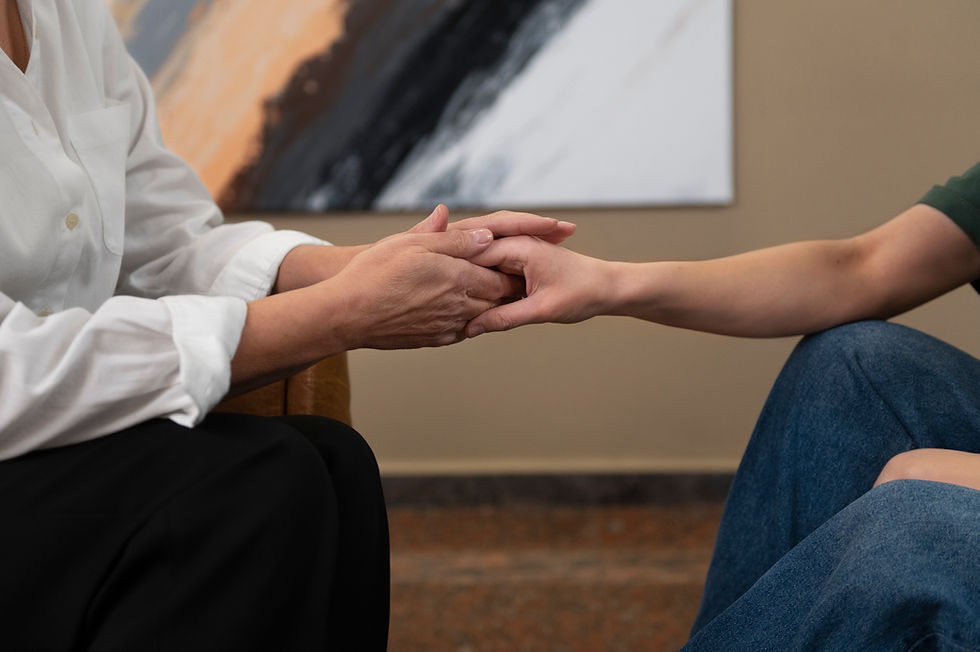
If the holidays are bringing up difficult emotions and creative self-care alone isn't enough, professional support can help. At Tune in Therapy, we understand that the holidays can be triggering, overwhelming, and emotionally complex—especially for neurodivergent individuals, trauma survivors, and those managing grief or family difficulties.
Our therapists can help you develop personalized self-care strategies, process difficult emotions, set boundaries, and navigate holiday challenges with greater ease. We incorporate creative and somatic approaches alongside traditional therapy to support your emotional well-being in ways that resonate with how you actually process and heal.
Struggling with holiday stress? Connect with Tune in Therapy today and get support that honors your real experience and helps you navigate this season authentically.


Comments